Advanced Topics
Key Concepts of Ship Stability for Mariners
Master key ship stability concepts to ensure effective handling and safety on the seas for mariners of every experience level.
Key takeaways
- Master key ship stability concepts to ensure effective handling and safety on the seas for mariners of every experience level.
- Understanding the Dynamics of Ship Stability:
- What is Ship Stability?
- Key Terms
Article topic
Advanced Topics
Master key ship stability concepts to ensure effective handling and safety on the seas for mariners of every experience level.
Understanding the Dynamics of Ship Stability:
Key Concepts for Mariners
In maritime operations, grasping ship stability principles is essential for safe vessel handling. Stability is a vessel's ability to return to an upright position after tilting due to external forces like wind and waves. This guide provides practical insights into ship stability and safety tips for mariners of all experience levels.
Key Takeaways
- Ship stability ensures safety and effective handling at sea.
- Understanding the difference between initial and dynamic stability is crucial.
- Utilizing the Stability Book is vital for informed decision-making.
What is Ship Stability?
Ship stability refers to a vessel's ability to maintain or regain an upright position after heeling. Key factors affecting stability include ship design, load conditions, and external forces.
Key Terms
- Metacenter (M): The point where the buoyant force acts upward through the center of buoyancy at a tilt.
- Center of Gravity (CG): The point where the vessel's weight is concentrated.
- Center of Buoyancy (CB): The point through which buoyant force acts, shifting with heel angle.
A stable ship has a metacenter above its center of gravity, allowing it to regain an upright position. If CG is above M, the vessel is unstable.
Types of Stability: Initial and Dynamic
Stability is classified into two categories:
1. Initial Stability
Initial stability concerns the vessel’s response to small heel angles determined by hull shape and CG position. A wider beam and lower CG typically offer greater initial stability.
2. Dynamic Stability
Dynamic stability considers the ship's behavior at significant heel angles and under wave conditions. It evaluates the vessel's response to forces over time.
Practical Tip
To enhance initial stability, distribute cargo to maintain a low center of gravity, reducing rolling in waves.
Assessing Stability: The Stability Book
Every vessel must have a Stability Book detailing its stability characteristics:
- Stability Curves: Graphs showing stability changes with heel angles.
- Load Line and Plimsoll Mark: Indicators of the maximum loading capacity.
Safety Notes
Familiarize yourself with your vessel’s Stability Book before departure. Understanding stability curves and limits aids in making informed operational decisions. Always remain below the suggested maximum heel angle.
The Role of Weather in Ship Stability
Weather substantially impacts ship stability. Strong winds can create heeling situations that require immediate stability assessments.
Effective Strategies
- Sail Reduction: Lower the sail area in strong winds to minimize force.
- Ballasting: Adjust ballast to enhance stability by lowering the center of gravity.
- Heeling Response: Be prepared to change course and speed depending on the vessel’s heeling behavior.
Safety Note
Always monitor weather conditions before and during your voyage to anticipate potential risks to stability.
Conclusion
Mastering ship stability principles is vital for ensuring safety and effectiveness at sea. Regularly consult the Stability Book and adapt to changing conditions to minimize risks in vessel operation. Continuous education and training on stability will build a strong foundation for safe sailing practices.
FAQs
- What is the importance of ship stability?
Ship stability is critical for safety and operational effectiveness, ensuring a vessel can recover from external forces causing tilts. 2. How can I improve my vessel's stability?
Maintain a low center of gravity through proper cargo loading and effective ballast use during voyages. 3. What factors affect ship stability?
Factors include ship design, weather conditions, loading distributions, and the vessel's operational state.
Related Topics
Practical Application
Understanding ship stability should be viewed as a decision-making skill rather than mere memorization. Mariners need to recognize signs, utilize consistent routines, and remain vigilant when conditions appear uncertain.
Why It Matters On Board
A vessel is a dynamic environment, where minor mistakes can lead to significant issues. Awareness of stability affects decision-making regarding routes, crew briefings, and equipment readiness. The focus on ship stability not only helps prevent emergencies but also enhances crew experience.
Pre-Departure Checklist
Verify crew understanding of the plan, assess weather and sea conditions, and check equipment functionality before departure. Establish backup plans to ensure operational safety in case of unexpected changes.
Common Mistakes
Common mistakes include acting too late, relying on single information sources, and underestimating crew fatigue. Always reassess conditions, make informed decisions early, and communicate effectively.
Final Summary
Understanding ship stability is fundamental to safe maritime operation. By incorporating practical knowledge into routines and training, mariners can navigate effectively while maintaining high safety standards. This approach leads to confident decision-making, comfortable sailing, and effective crisis management, fostering a safer maritime environment.
Practical skipper examples
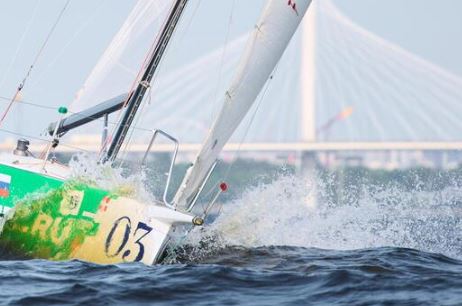
Theory becomes reality when you are standing at the helm in open water. Consider a common scenario: a mid-sized cruising sailboat navigating a cross-sea with beam winds. As the vessel heels, the Center of Buoyancy (CB) shifts outboard toward the low side, creating a righting lever (GZ). If a skipper carries too much sail, the heeling moment overwhelms this lever, pushing the rail toward the water. An actionable habit here is monitoring the "feel" of the rudder; if the vessel develops excessive weather helm, the center of effort from the sails has shifted too far aft or outboard, drastically reducing the effective stability margin.
Another critical example involves the "Free Surface Effect" in a sloshing water tank. Imagine a skipper who has half-emptied a large freshwater tank during a long voyage. If the tank is not baffled, the shifting weight acts like a pendulum, essentially raising the vessel’s vertical Center of Gravity (VCG). When the ship rolls to port, the water rushes to port, effectively "pulling" the ship further over. Experienced mariners learn to keep tanks either completely full or completely empty to eliminate this free surface, rather than leaving them half-full.
Consider the distribution of heavy stores. A novice might load heavy spare parts or engine components high up in a locker to save space. A seasoned skipper knows that placing 50kg in a cabin locker three meters above the waterline is equivalent to adding a "weight aloft" penalty that makes the vessel roll more violently and recover more slowly. By keeping the bilge area clear for heavy deadweight, the skipper creates a lower CG, which acts as a foundational safety buffer.
When approaching a harbor in following seas, stability dynamics shift. As a wave passes under the hull, the effective length of the ship supported by buoyancy changes. If the crest is amidships, the bow and stern lose support, potentially reducing longitudinal stability and causing the vessel to yaw aggressively. Recognizing this, a prepared skipper will proactively reduce speed to allow the vessel to maintain directional control, ensuring the ship stays "in the trough" rather than trying to surf uncontrollably, which could lead to a broach—a catastrophic loss of stability caused by an unexpected heel angle.
Finally, think about deck cargo. A common mistake is securing a dinghy or heavy gear on deck without considering the lever arm. Even a moderate weight placed on the cabin top increases the roll period. A skipper who understands these dynamics will always seek to secure heavy items as low as possible, ideally near the centerline, to ensure the vessel remains "stiff" and recovers quickly from a gust or swell. These choices transform the abstract concept of GM (metacentric height) into a daily operational philosophy that keeps the crew upright and safe.
Detailed checklist for safe use
Ensuring vessel stability is a continuous process that requires vigilance. Use this checklist to maintain a safety-first mindset during your voyage planning, execution, and conclusion.
Pre-Voyage Planning
- [ ] Review the Load Line: Ensure the vessel is not overloaded; check that the Plimsoll mark is clearly visible and within legal and safe limits for the current water density.
- [ ] Liquid Inventory: Verify tank levels. Prioritize topping off fuel and water tanks to prevent free surface effects, or empty them completely if weight-saving is required.
- [ ] Cargo Distribution: Audit deck cargo. Move heavy items to the lowest possible point, as close to the vessel’s centerline as possible.
- [ ] Stability Book Review: Confirm the vessel’s current configuration matches the data provided in the stability booklet. Note the maximum heeling angles for the current sea state.
- [ ] Weather Analysis: Cross-reference wind forecasts with your vessel's specific stability curve to identify "red line" conditions where sail reduction becomes mandatory.
Underway Checks
- [ ] Roll Period Monitoring: Periodically observe the ship’s roll. A very slow, "lazy" roll suggests low stability, while an abrupt, jerky roll suggests high stability (stiffness). Adjust speed or heading if the motion feels uncomfortable or dangerous.
- [ ] Reefing Milestones: Establish a pre-determined wind speed for reefing. Do not wait for the rail to touch the water; reduce sail early to maintain an upright, efficient hull form.
- [ ] Rudder Feedback: If the helm feels heavy or unresponsive, investigate immediately. This often indicates the ship is heeling beyond its efficient hull shape, increasing drag and reducing stability.
- [ ] Shifting Load Audit: Every four hours, check that all deck lashings, internal stores, and heavy equipment remain secure. A shifted load can lead to a permanent list, which drastically reduces your safety margin against a roll.
- [ ] Bilge Maintenance: Regularly pump the bilges. Accumulated water represents a hidden free surface effect that compromises your vessel’s recovery rate.
Post-Use and Maintenance
- [ ] Inspection: Check hull integrity for any damage that might allow water ingress, which would immediately compromise buoyancy.
- [ ] Records Update: Note any changes in vessel weight or configuration in the logbook. If permanent equipment was added or removed, inform your safety officer or re-calculate the stability baseline.
- [ ] Stowage Reset: Ensure all portable items are moved back to their primary "at-sea" storage positions. Avoid the temptation to leave heavy items on tables or benches after arrival.
- [ ] Tank Calibration: Check the state of your tanks and plan for the next voyage’s fuel/water requirements to ensure the vessel starts the next trip with optimal trim and heel characteristics.
Troubleshooting and common mistakes
Even experienced mariners fall prey to subtle stability errors. Recognizing the warning signs early is the difference between a minor incident and an emergency.
One common mistake is "over-tightening" the ship. Beginners often believe that a very stiff ship is safer. While stability is good, excessive stability (a very high metacentric height) leads to a violent, rapid roll that can damage rigging, fatigue the crew, and cause loose gear to become projectiles. If your ship snaps back to upright with a bone-jarring impact, consider distributing weight slightly higher to "soften" the roll. Conversely, a vessel that takes an unusually long time to return to upright is "tender" and requires immediate weight removal from above deck or the addition of ballast below.
A dangerous warning sign is a permanent list that develops during a voyage. If your vessel heels to one side and stays there, do not assume it is just the wind. Perform a "list check":
- Check the bilge for flooding on the low side.
- Verify if cargo has shifted.
- Check the fuel tank transfers; an unequal weight distribution is a classic culprit.
If the list persists, reduce sail immediately and alter course to minimize the heeling force. Do not attempt to "fix" a list by transferring weight until you have identified the root cause; incorrectly shifting ballast can cause the vessel to flip if the true cause is trapped water.
Another frequent error is underestimating the "windage" of modern deck configurations. Large canvas covers, solar panels, and wind generators add massive wind resistance high above the center of gravity. In a gale, this surface area acts like a sail that you cannot reef, constantly pushing the vessel over. If your vessel feels "pushed" during gusts, treat these accessories as part of your sail plan; if the wind exceeds a certain threshold, they may need to be dismantled or covered to reduce the heeling moment.
Finally, beware of "groupthink" regarding safety limits. Just because a vessel "can" handle 30 knots of wind does not mean it should. Stability curves are calculated in controlled conditions; they do not account for the chaos of breaking waves, confused seas, or equipment fatigue. Always maintain a "reserve of stability." If you feel the ship struggling, your intuition is likely correct. Err on the side of caution—reduce sail, adjust heading, and secure loose items before the situation demands it. Correcting an unstable state is infinitely easier than recovering from a knockdown.
Final safety summary
Ship stability is not a static calculation found in a manual; it is a dynamic, living aspect of seamanship that changes with every liter of fuel consumed and every degree of change in the wind. The core of safe operations lies in your ability to visualize the Center of Gravity and the Center of Buoyancy as they dance in relation to each other. When they align, your ship is stable; when they diverge beyond your vessel’s specific design limits, the risk of capsizing increases significantly.
To summarize your commitment to safety:
- Respect the Curve: Every vessel has a limit. Know your stability curve and recognize that as your heel angle increases, your righting arm—the very force keeping you upright—often decreases after a certain point.
- Minimize Free Surfaces: Whether in fuel tanks or flooded bilges, free-moving liquids are an invisible enemy. They shift your center of gravity at the worst possible moments.
- Weight Matters: Keep heavy weights low and centered. This is the simplest, most effective way to improve your ship’s natural ability to recover from a roll.
- Be Proactive: Stability is maintained through anticipation. Reefing early, securing cargo, and monitoring the weather are not "extra" tasks; they are the fundamental responsibilities of the skipper.
Your next steps should involve a practical audit of your own vessel. Take a quiet moment at the dock to look at your stowage. Ask yourself: "If I were in a 40-degree roll, would this item stay put?" If the answer is no, secure it now. Then, review your stability book and identify the "critical heel angle" for your specific vessel—the point where your righting lever begins to diminish. Knowing this number gives you a clear mental threshold for when to abandon comfort in favor of safety.
Stability is a discipline of constant, small adjustments. By integrating these checks into your routine, you move from merely operating a vessel to mastering it. Keep your gear low, your tanks full, your weather eye sharp, and your respect for the sea’s power constant. Safe sailing is the result of informed decisions made long before the storm arrives. Continue to educate your crew on these principles so that everyone on board acts as a guardian of the vessel's integrity. When you treat stability as a primary navigation metric, you ensure that you and your crew return to port safely, every single time.
Advanced onboard scenarios
Navigating high-latitude swells requires understanding the phenomenon of parametric rolling. This occurs when the encounter period of waves synchronizes with the vessel’s natural roll period, often in head or following seas. Even in moderate conditions, a ship may experience rapidly increasing roll amplitudes. A critical advanced maneuver is the immediate alteration of course relative to the wave train. Increasing speed often worsens this, so skippers must proactively reduce throttle and adjust the heading by 20 to 30 degrees.
Another scenario involves the "free surface effect" during tank transfers. When moving fuel or water, partially filled tanks drastically raise the effective Center of Gravity. Advanced skippers must prioritize tank-to-tank transfers that minimize the duration of slack tanks, using high-speed pumps to maintain stability margins throughout the evolution.
Extra safety decision points
Skippers must adopt a structured escalation protocol when stability parameters approach critical limits. When a vessel exhibits a "lazy" or sluggish return to upright, it serves as a primary indicator of reduced metacentric height (GM). At this threshold, the decision-making process must escalate: all non-essential top-weight must be secured or lowered, and the vessel should prepare for immediate de-ballasting or shifting of heavy cargo to the lowest possible deck level.
Environmental thresholds provide the secondary decision trigger. If wind speeds exceed the vessel’s design-basis heel limit, the "Safe Haven" policy mandates immediate deviation to a sheltered lee. Do not wait for visible deck-edge immersion. If the roll period increases by more than 15% from the vessel's calculated baseline, the ship is compromised; abort the current track and heave-to.
Operational Stability Verification Checklist
- Verify all scuppers and freeing ports are completely clear of debris before entering heavy weather.
- Confirm that all watertight compartment integrity checks have been logged in the last 4 hours.
- Compare current GM values against the Stability Book’s "worst-case" loading condition for the current fuel/water levels.
- Assign a dedicated stability watch officer to monitor real-time heel sensors if provided.
- Ensure the emergency ballast pump controls are accessible and verified operational from the bridge.
- Confirm that all heavy deck gear is lashed with secondary safety turnbuckles to prevent shifting under maximum rolling angles.
- Cross-reference current wave encounter frequency against the ship’s natural roll period; update speed and heading immediately if synchronization is detected.
Calculating Potential Hazards
When assessing stability, focus on the "Critical Heel Angle." As a vessel heels, the Center of Buoyancy shifts outboard. If the heel angle exceeds the point where the deck edge enters the water, the waterplane area decreases rapidly, leading to a sudden loss of righting arm. This is a non-linear stability cliff. Mariners must never operate at an angle of heel that approaches 50% of the calculated deck-edge immersion angle. By maintaining a significant buffer, you ensure that unexpected gusts or swell encounters do not push the ship past the point of no return. Use the Stability Book to identify this specific angle for your current load condition and mark it clearly on the helm console as a "No-Go" threshold. Constant vigilance regarding the relationship between loading, fuel consumption, and environmental stressors remains the hallmark of a professional mariner.
Frequently asked questions
Ship stability is crucial for safety and operational effectiveness, ensuring the vessel can recover from tilts caused by external forces.
Comments coming soon
We’re preparing a community discussion area for every learning article.
Related articles
Read More
Continue with related sailing guides and topic pages to build a stronger understanding before your next passage.
Advanced Topics
Advanced Navigation Techniques for Mariners Explained
Master advanced maritime navigation with this comprehensive guide covering celestial methods, electronic chart proficiency, radar parallel indexing, and critical safety p
Read MoreAdvanced Topics
Complete Beginner Sailing Training Guide | Marstick
Master the art of sailing with our comprehensive beginner guide, covering everything from essential knots and navigation basics to advanced safety and maintenance procedu
Read MoreAdvanced Topics
Complete Guide to Offshore and Long-Distance Cruising: Essential Insights for Safe Voyages
Master the art of offshore and long-distance cruising with this comprehensive guide covering essential navigation, safety protocols, equipment checklists, and expert stra
Read MoreAdvanced Topics
Explore more in Advanced Topics
Offshore decisions, complex systems, advanced navigation, and high-confidence skipper skills.
Read MoreLearning Center
Browse the Learning Center
Find navigation, weather, seamanship, safety, and marina planning articles.
Read More