Practical Skills
Securely Tie Up Your Boat to a Slip: Expert Guide
Master boat mooring techniques with our expert guide. Ensure your vessel's safety with clear, practical instructions and key best practices.
Key takeaways
- Proper mooring techniques enhance vessel and marina safety.
- Always assess environmental conditions before docking.
- A cleat hitch is the preferred knot for securing boats.
- Regularly examine lines and fenders for wear and reliability.
Article topic
Practical Skills
Master boat mooring techniques with our expert guide. Ensure your vessel's safety with clear, practical instructions and key best practices.
Introduction
Securing your boat to a slip is a crucial skill for every mariner. It protects your vessel and ensures the safety of the marina environment. In this guide, we will cover essential techniques and best practices for effectively tying your boat to a slip.
Understanding Docking Components
Before mooring, familiarize yourself with the key components:
- Slip: The designated space for parking your boat.
- Cleat: Hardware used to secure lines.
- Fenders: Protective cushions between your boat and the dock.
- Lines: Ropes utilized for securing your boat.
Recognizing these elements helps visualize the docking process more clearly.
Preparing for Docking
Assessing Environmental Conditions
Before you approach the slip, evaluate:
- Weather: Ensure conditions are conducive to safe docking.
- Wind Direction: Understand how the wind will influence your approach.
- Traffic: Be aware of other vessels and obstacles.
Choosing the Right Slip
Select a slip suitable for your vessel by verifying:
- Depth: Confirm it accommodates your boat’s draft.
- Width: Ensure sufficient space for easy navigation.
Step-by-Step Guide to Tying Up
Step 1: Approach the Slip
- Slow Down: Reduce speed upon approach.
- Align the Boat: Position parallel to the dock.
- Engage Reverse: Use reverse for better control.
Step 2: Positioning the Boat
- Deploy Fenders: Place them on both sides to protect your boat.
- Aim for the Cleat: Direct your bow towards the dock cleat.
Step 3: Throwing the Line
- Prepare the Dock Line: Have it readily available.
- Toss to Partner or Dock: Alert your partner by saying "ready" if tossing.
Step 4: Tying the Knot
After securing the line:
- Use a Cleat Hitch: This knot offers security and is easy to untie.
- Tying Instructions: Loop, wrap around the base, and cross over the cleat.
Step 5: Adjusting the Lines
- Eliminate Slack: Ensure the lines are snug but not overly tight.
- Add Extra Lines: Use additional lines as needed for stability.
Best Practices for Secure Mooring
- Regularly inspect lines and fenders pre-departure.
- Consider a double loop in rough weather for enhanced security.
- Replace worn dock lines to prevent failure.
Safety Considerations
- Always wear a life jacket while docking.
- Practice in low-traffic areas if you're a novice.
- Communicate clearly with crew members using specific signals.
Troubleshooting Common Docking Issues
- If the Boat Drifts: Check and adjust your lines as needed.
- If Winds Shift: Be prepared to re-secure lines to maintain stability.
Final Summary
Tying your boat securely to a slip combines skill and attention to detail. Utilize the outlined steps and best practices to enhance the safety and security of your vessel. Practice regularly to boost your confidence and proficiency in docking maneuvers.
FAQ
How do I know if my boat is secured properly?
Ensure that your lines are taut yet allow for some movement to accommodate weather changes. Also, check that fenders are correctly positioned to avoid contact with the dock.
What type of knot should I use?
The cleat hitch is recommended for securing a boat to a slip, as it is both secure and easy to untie later.
Can I double my lines?
Yes, in rough conditions, using a double loop or additional lines can enhance your boat's security.
What should I do if the wind picks up?
Be ready to adjust lines for extra security, and consider adding another line if necessary.
Suggested Internal Links:
Visual Prompts:
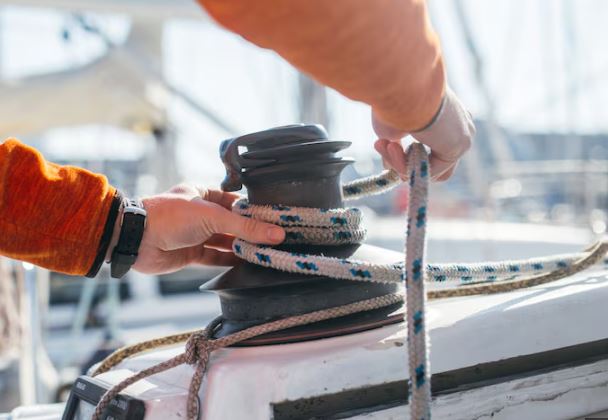
- A mooring scenario showing a securely tied boat.
- Close-up visuals of tying a cleat hitch knot.
- A sailor preparing to throw a line, demonstrating teamwork.
Practical skipper examples
Every slip presents a unique puzzle based on the local environment. Consider a common scenario: the "Crosswind Correction." Imagine you are approaching a slip with a 15-knot beam wind pushing you toward a neighboring boat. An inexperienced skipper might try to fight the wind by turning the bow directly into it, but this often causes the stern to swing wildly, creating a collision risk. A seasoned skipper instead approaches at a slight angle, using the wind to "crab" the boat toward the dock while maintaining steerage. As you enter the slip, you shift into neutral just before the dock contact point, allowing the boat's momentum to carry you into the berth while using a pre-set stern line to arrest the forward motion.
Another practical scenario is the "Single-Handed Docking Challenge." When sailing alone, you lack the luxury of a crew member on the foredeck. The secret here is the "Midship Spring Line" maneuver. Before turning into the slip, loop a long spring line over a cleat amidships and keep the bitter end in your hand. As you enter the slip, simply step onto the dock with that line and drop a loop over a piling or cleat. Because it is attached to the center of the boat, you can lock the engine in gear against the spring to hold the boat perfectly in place. This gives you ample time to walk forward and aft to secure the bow and stern lines without panic or rushing.
Consider the "Tidal Transition" example as well. If you are docking in an area with a 6-foot tide, securing your lines too tightly is a recipe for disaster. If you tie your lines short at high tide, your boat will be hanging from the cleats by the time the tide drops, potentially pulling the deck hardware right out of the fiberglass or causing the boat to tip dangerously. A pro-tip is to use "snubber" lines or lead your mooring lines through rings rather than cleats to allow for vertical movement. By creating a "pendulum" effect where the lines have a bit of slack, you accommodate the water level change while keeping the boat centered in the slip.
Finally, think about "Current-Heavy Approaches." In channels with high flow, your rudder becomes less effective at low speeds. Instead of trying to maintain a straight line relative to the dock, judge your speed relative to the water. If you approach too slowly, the current will take control of your hull. You must maintain enough speed to keep water flowing over your rudder blades. Use short bursts of throttle to steer, then return to neutral to let the boat glide. This "pulse-throttle" technique prevents the boat from accelerating uncontrollably while ensuring you never lose the ability to steer away from a dock corner or a protruding piling during the critical final seconds of the docking maneuver.
Detailed checklist for safe use
A professional-grade docking operation begins long before you see the marina entrance. Use this structured checklist to ensure a stress-free transition from open water to the safety of the slip.
Pre-Arrival Planning
- Check the marina's slip assignment map: Know exactly which letter or number corresponds to your berth.
- Verify water depth at low tide: Ensure your keel won't touch the bottom during your arrival window.
- Check the tide table: Will you be arriving at slack water, or is a strong ebb/flood tide working against you?
- Prepare your deck: Clear all hoses, fishing gear, or loose items from the side decks so you have a clean path to move from the cockpit to the cleats.
- Communicate with crew: Assign specific roles. One person handles lines, one handles fenders, and one manages the helm. Discuss the "abort" signal if the approach feels wrong.
Underway and Arrival Checks
- Fender positioning: Hang fenders at the correct height based on the dock's rub rail or piling height. Remember to place one "roving" fender for the person jumping onto the dock.
- Line readiness: Ensure your lines are flaked out (not tangled) and ready for deployment. Double-check that you have two spring lines ready, as these are the most important for controlling the boat's longitudinal movement.
- Engine check: Confirm the engine is warmed up and responds immediately to shift changes. Test your "neutral" gate to see how long the boat glides without power.
- Visual scan: Look for dock lines from neighboring boats that might be dangling in the water, posing a risk of snagging your propeller.
Post-Docking Security Checks
- Line tensioning: Once tied, stand on the dock and push the boat. If it hits the dock hard, shorten your lines. If it feels too stiff, add a bit of slack.
- Cleat integrity: Inspect the dock cleats. If they look rusted or shaky, find an alternative piling or reinforce your attachment with a second line.
- Chafing gear check: Ensure lines are not rubbing against sharp gelcoat edges or metal railings. Use chafe guards or sections of rubber hose if necessary.
- Shore power and water: Once the boat is secure, connect shore power. Ensure the cord has enough slack to accommodate tide changes and is not dangling in the water.
- Engine shut-down: Only after the lines are confirmed secure should you turn off the engine. Confirm the boat is not "drifting" against the finger pier before leaving the helm.
Troubleshooting and common mistakes
Even experienced skippers can face "docking drama" when conditions shift. The most common mistake is the "Panic Throttle." When a boat doesn't respond exactly as expected, the natural reaction is to increase engine RPM. This almost always exacerbates the problem, causing the boat to shoot forward or backward with too much momentum, often leading to a hard collision. The correction: If things go wrong, shift to neutral, assess the drift, and if necessary, back out and start the approach over. There is no shame in a "go-around."
Another frequent error is "Improper Fender Placement." Many skippers place fenders too high. If the boat rolls or if the dock is low, a high-placed fender becomes useless, leading to direct fiberglass-on-wood contact. Always adjust fenders to sit exactly at the waterline level of the widest point of your beam. If you are entering a slip with very low pilings, consider horizontal fenders or fender boards that distribute the pressure across a wider area of the hull.
"The Loose Line Trap" occurs when a skipper assumes a single cleat hitch is enough. A common warning sign of a bad hitch is a line that starts to vibrate or "sing" under load. This means the hitch is poorly seated. Always ensure you have at least two full turns around the base of the cleat before starting your locking hitches. If you notice a line looking frayed or showing signs of "sun rot" (fading and stiff texture), replace it immediately. A line that breaks under the pressure of a shifting wind is a major liability that can damage both your hull and your neighbor’s boat.
Finally, beware of "The Pilot’s Ego." Many docking incidents happen because the skipper refused to ask for help or admit the conditions were too difficult. If the wind is howling at 25 knots and you aren't confident, call the marina office on your VHF radio and ask for a dock hand to assist. A simple "I'd appreciate some guidance on this entry" can turn a potential disaster into a professional arrival. Remember that your goal is not to perform a "hero docking" for the neighbors to see, but to get your vessel secured without a single scratch on the topsides.
Final safety summary
Safety in the marina is not just about the moment you tie your final knot; it is a holistic approach to vessel management. Your boat is a multi-ton object that requires careful handling. By maintaining your docking equipment—lines, cleats, and fenders—you reduce the stress on the hull and the likelihood of mechanical failures during storms. Always prioritize the "two-line minimum" rule: if a slip is exposed, have at least two spring lines to prevent the boat from surging fore and aft.
Moving forward, your next step as a skipper should be to conduct a "Dry Dock Assessment." Once a year, examine all the cleats on your boat. Are the backing plates solid? Is there any sign of stress cracking in the fiberglass around the hardware? If you notice movement in a cleat, do not wait until the next storm to repair it. Strengthening these attachment points is the single most effective way to ensure your boat stays put in any weather.
Additionally, consider practicing your docking maneuvers in empty areas of the marina during calm conditions. Use plastic jugs as targets to practice your "aim" and engine response. Developing this muscle memory will pay dividends when you find yourself forced to dock in a narrow slip during a sudden thunderstorm. Keep your lines organized, your crew informed, and your ego in check. The best skippers are those who treat every docking as a serious, deliberate task, regardless of how many times they have performed it before. Stay vigilant, stay prepared, and keep your vessel safely within its berth.
Scenario 1: The Crosswind Landing. Imagine approaching a narrow slip at a local marina with a 15-knot beam wind. A novice might panic, but an experienced skipper calculates the "set and drift." As you approach, the wind pushes the bow away from the dock. Instead of fighting it with the rudder, steer slightly into the wind while maintaining a steady, low-speed approach. Use your windward spring line first. By dropping a spring line over the midship cleat early, you effectively "pivot" the boat into the slip despite the lateral pressure. Once the spring is secure, the engine power can be eased to neutral, allowing the wind to gently pin the boat against the fendering rather than forcing a collision.
Scenario 2: Single-handed Night Docking. Visibility is minimal, and depth perception is skewed. Rely on your pre-arranged deck lighting and a clear, high-contrast fender placement. Before entering the fairway, ensure all lines are coiled and ready to run—no knots in the lines. If you are solo, keep your docking line attached to the boat’s midship cleat before you even kill the engine. Upon entering the slip, step off with the line, move to the dock cleat, and loop it back to the boat. By keeping the line pre-rigged, you eliminate the frantic dash across the deck, ensuring the boat is held securely before you even think about adjusting your stern lines.
Scenario 3: Current-Heavy Estuary. If the tide is rushing into your slip, your forward momentum will be amplified. Approach slower than you think is necessary. If you overshoot, do not force the turn; abort and re-enter. Focus on using your stern lines to prevent the boat from "sailing" forward into the dock face as the current pushes against your transom.
Pre-Departure Planning
- Verify the weather forecast for the duration of the trip; ensure the slip destination is sheltered from projected wind shifts.
- Confirm the tide charts for your return time to ensure depth remains adequate for your vessel's draft.
- Inventory your docking gear: check for four primary lines, two spring lines, and at least four fenders in good working order.
- Assign roles to crew members: designate a "line handler" for the bow, the stern, and a "fender watcher" who can adjust positions dynamically as the boat approaches the dock.
Underway and Arrival Checks
- Ten minutes before arrival, have all lines flaked and free of snags.
- Deploy fenders at the specific height of the pier’s rub-rail, not the water line.
- Confirm the slip width; if there are protruding nails or rough concrete edges, adjust fender positioning to cover those specific hazards.
- Communicate intentions: ensure the skipper and crew agree on which line (usually the windward spring) will be secured first.
- Check the engine controls and gear selector one final time before entering the confined marina fairway to avoid any unexpected neutral gear stalls.
Post-Mooring and Securement
- Observe the "load distribution": check that no single line is under excessive tension while others remain slack.
- Check chafe gear: wrap protective sleeves or cloth around lines where they rub against abrasive dock edges or fairleads.
- Verify electrical connections: ensure the shore power cable has enough slack to accommodate tide changes, preventing the cord from becoming a "tightrope" that pulls out of the socket.
- Final walkthrough: double-check that every cleat hitch is locked, the engine is fully off, and the vessel's registration/ID is visible if required by marina rules.
Advanced Line Tensioning Techniques
Mastering the "balanced tension" approach is what separates a novice from a seasoned captain. When securing a boat for the long term, you must account for "harmonic movement." If all your lines are pulled drum-tight, the boat loses its ability to flex with the wakes of passing vessels, which puts immense strain on your deck cleats and potentially rips the hardware right out of the fiberglass.
Aim for a setup where the spring lines prevent the boat from moving fore and aft, while the breast lines or dock lines are left with just enough "give" to allow the vessel to rise and fall comfortably with the tide. A good rule of thumb is the "hand-grip" test; if you cannot move the line an inch or two by pulling firmly with your hand, it is likely too tight for a long-term stay.
Managing Tidal Fluctuations in Fixed Slips
If your marina uses fixed piers rather than floating docks, your mooring strategy must change entirely. The vertical distance between your deck cleat and the dock cleat will change significantly with the tide.
When tying up during a low tide, leave your lines significantly looser than you would at high tide. A line tied perfectly at low tide can become a snapping hazard or pull your boat hard against the pilings as the tide rises. If you are staying for multiple days, you must adjust your lines at least twice daily. Some skippers utilize "snubbers"—heavy-duty rubber or spring-based shock absorbers—to automatically manage the tension as the boat moves, providing a buffer that protects both the boat’s cleats and the dock’s structural integrity.
Environmental Maintenance: Protecting Your Gear
Exposure to UV radiation and salt spray turns nylon and polyester lines into brittle, weakened hazards over time. Every three months, inspect your lines for "hairy" spots or discoloration. If the fibers are fraying, the internal strength is compromised by up to 50%. Do not wait for a storm to discover a snapped line; replace them when they show the first signs of stiffness.
Similarly, keep your fenders clean. Dirt and salt particles trapped on the surface of a fender act like sandpaper against your boat's gelcoat. A quick rinse with fresh water and a mild soap every few weeks will preserve your boat's finish and ensure the fenders remain supple enough to cushion the impact of docking. Investing in high-quality fender covers can also mitigate this wear significantly, protecting both the dock hardware and the vessel’s aesthetic.
Emergency Response Procedures
Even the most prepared captain can face a "docking emergency"—such as an engine failure or a sudden gust of wind pushing the boat into a neighbor. In these instances, the priority shifts from perfect mooring to vessel preservation.
Keep a "crash fender" or an extra, un-deployed fender in the cockpit at all times. If a collision is imminent, use this to cushion the impact points manually. Never attempt to stop a moving boat with your hands or feet; the force of even a slow-moving boat is immense and can cause severe injury. If the boat is being pinned against the dock by wind and you cannot get the engine into gear, use your boathook to push off the dock, create space, and reset your approach. Always have your fenders positioned before you enter the slip—a fender is the cheapest insurance policy you will ever own. A boat with deployed fenders can often survive a clumsy landing, but a boat without them can suffer thousands of dollars in fiberglass damage in seconds.
Frequently asked questions
Ensure that your lines are taut yet allow for some movement to accommodate weather changes. Also, check that fenders are correctly positioned to avoid contact with the dock.
Comments coming soon
We’re preparing a community discussion area for every learning article.
Related articles
Read More
Continue with related sailing guides and topic pages to build a stronger understanding before your next passage.
Practical Skills
20 Essential Sailing Safety Tips: Sail Smarter and Safer
Master essential sailing safety with our comprehensive guide. From vessel maintenance to emergency drills and navigation, learn how to sail smarter and stay safe on the w
Read MorePractical Skills
5 Essential Boating Knots Every Sailor Must Master
Master the 5 essential boating knots every sailor must know. Includes step-by-step instructions, safety tips, and expert advice for secure mooring and sailing.
Read MorePractical Skills
Beginner's Guide to Docking Techniques for Safe Mooring
Master the art of docking with this comprehensive guide for beginners. Learn essential mooring techniques, safety protocols, and maneuvers to handle your boat like a pro.
Read MorePractical Skills
Explore more in Practical Skills
Everyday tasks, planning habits, knots, checks, and confidence-building skills.
Read MoreLearning Center
Browse the Learning Center
Find navigation, weather, seamanship, safety, and marina planning articles.
Read More